
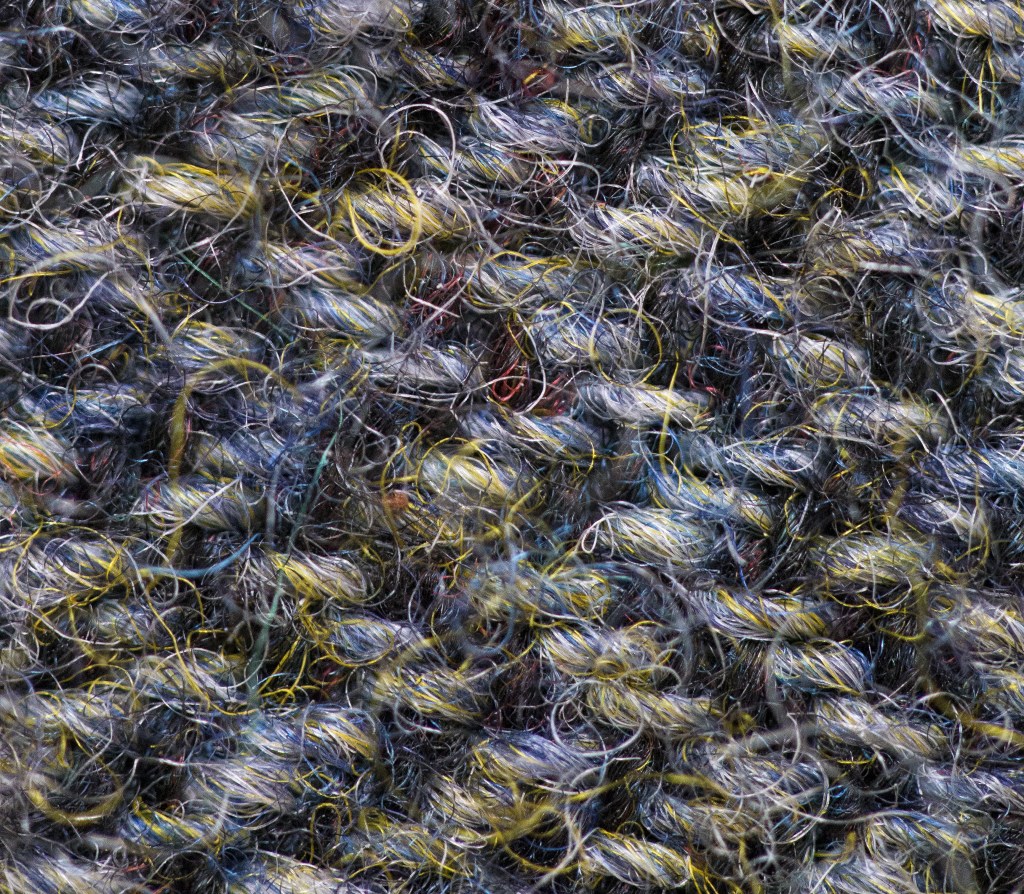
In 2019, author Douglas Stuart spent some months living in Scotland’s Western Isles (also known as the Outer Hebrides or, in Gaelic, as Na h-Eileanan an Iar). It was here that he began the novel that became John of John.

The Setting
Set in the late 1990s, in the fictional settlement of Falabay in the southern part of the island of Lewis and Harris, John of John tells the story of a young man returning home after four years on the mainland. Coming back to the croft where he grew up, the now 22-year-old Cal is forced to re-set his identity. No longer a free-wheeling, textile student in Edinburgh, Cal is jammed back into a community with rigid beliefs and long-established patterns of behaviour.
The People
Falabay’s inhabitants are crofters. They earn meagre incomes, mostly as weavers, fishermen and sheep farmers. As tenants, they pay rent to a landlord and live in homes they will never own; as Free Presbyterians, they hold fast to unyielding interpretations of the Christian scriptures. They are bonded by history and isolation.
John of John centres on four people: John Macleod, his son John-Calum (Cal) Macleod, his mother-in-law Ella Morrison, and his neighbour Innes MacInnes. (John’s wife, Grace, left when Cal was eight-years-old. She now lives on the western side of the island with John’s older brother Uilleam and their four children.)
John is a bundle of contradictions, wracked by deception and indecision. He is violent and tender, upright and dishonest.
Cal, a Gaelic-speaker and capable weaver like his father, is a gifted designer and textile worker wrapped in a shroud of failure and rejection. Unsure where he belongs, he simply wants someone to love.
Glaswegian incomer Ella has forged her own solitary path on the island for forty-eight years. She is unflinching, determined and canny.
And then there’s Innes, known as ‘Gentle Innes’. Lonely, hopeful, filling his evenings with the distant chatter of strangers on his ham radio.
John, Cal, Ella and Innes. All four, secret-keepers.
Here are some of the ideas I pondered as I read and reflected on John of John. The questions may be of use to book clubs; if so, feel free to share them.
Identity
‘“And who do you belong to?”
‘It was a question islanders always asked … they needed to know his sloinntireachd, his lineage.
‘“I’m John of John of Iain of Iain the Breabadair.”’‘It had taken him less than ten minutes to pack up four years of his life. It had taken a little longer to fold himself away, to hide all the bits of himself that had slowly been unfurling since he had arrived on the mainland.’
While Cal has been living on the mainland, he and John have spoken regularly on the phone (once on Wednesdays and twice on the Sabbath). During one of their calls, after Cal has been away from home for four years, John tells his son that Ella’s feet have turned the colour of ‘calf liver’; her heart, circulation, mobility and mental capacity are also under strain. ‘It’s time’, he tells Cal. ‘You’ve had your fun.’
Cal is on the ferry, heading home, when a fellow-passenger asks: ‘And who do you belong to?’
In Falabay, Cal’s identity is defined by his ‘sloinntireachd’. Who he is is tied to his line of descent. In Edinburgh, he’s been free to re-shape himself.
Which bits of Cal have been ‘unfurling’ while he’s been living in the city? How completely does he ‘fold himself away’ on his return to Falabay?
An Enigma
John ‘put all his faith in the Presbyterian penicillin. For whatever ailed you there was only one cure: work and prayer.’
‘John read to them from the Bible most mornings and then again every night. He thought deeply about the scripture and the ways in which the Lord’s word could be applied to their lives.’
‘I am not the man I set out to be.’
John is the precentor at his local church. He takes his responsibilities to the congregation seriously. His bible knowledge is impeccable. But there are contradictions in his behaviours. He can be physically violent; he is willing to break the weavers’ code and deceive the mill. One struggle (revealed early in the novel) dominates all others. John’s problems are so ‘woven into’ who he is that he has ‘never been able to solve them for himself’. Sometimes, he has to ask God to ‘look away’.
How do you account for the paradoxes in John’s life? How do you think he explains them to himself? Do you have some sympathy for John’s choices and behaviours?
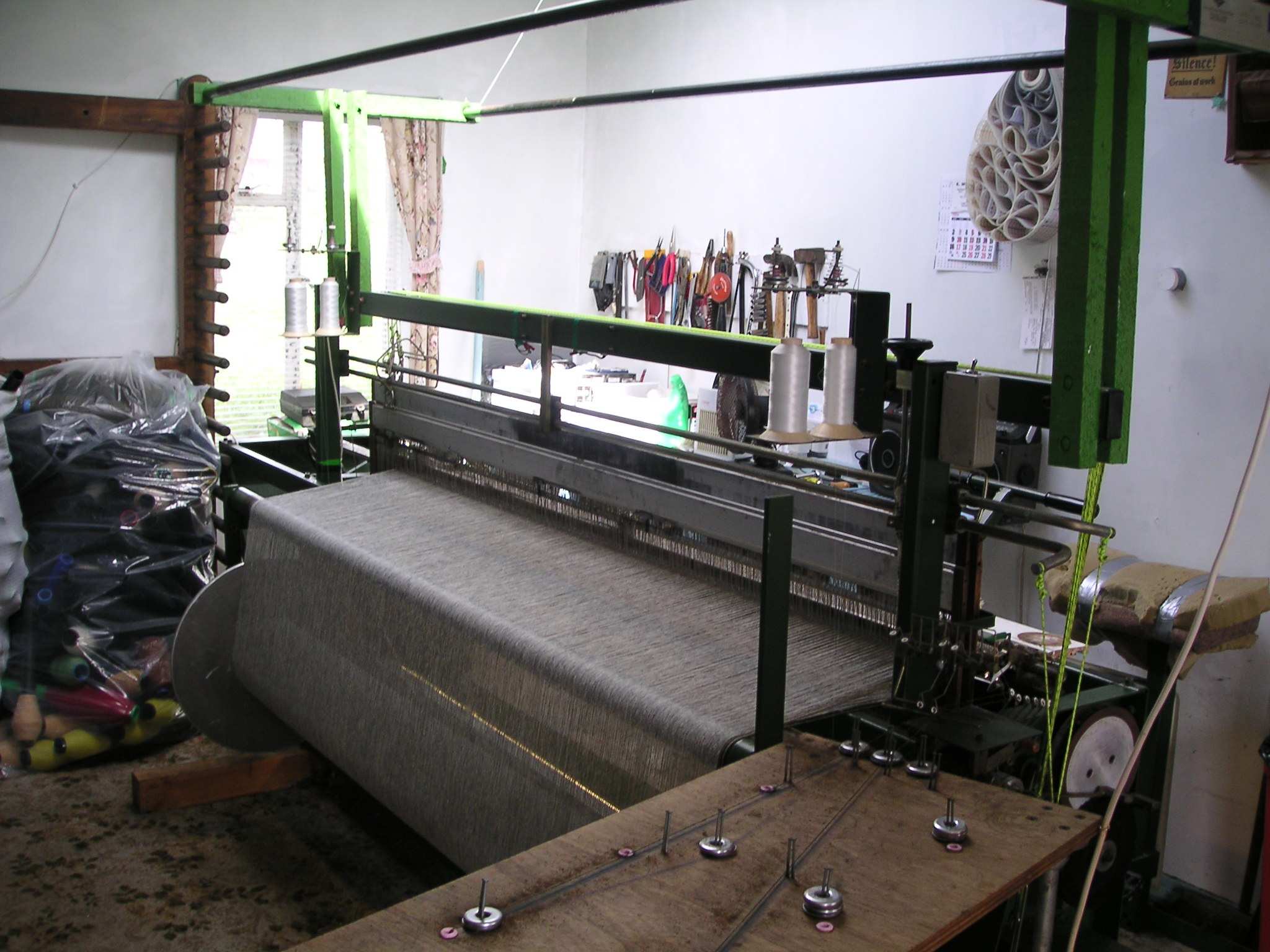
Harris tweed loom
Wojsyl, CC BY-SA 3.0, via Wikimedia Commons
Individuality
‘Do ye know for all those years, if any of those women wanted to leave me out, they just spoke Gaelic … for forty-odd year, I was meant to stand there and smile.’
‘She must have understood all the unkind things the women said about her, the petty remarks they made about her appearance … Cal marvelled at her then, at how she had defied them anyway by doing exactly as she pleased, by being exactly who she was.’
Ella is an incomer, having moved to Falabay with her husband when she was pregnant with Cal’s mother, Grace. She has been widowed for decades. Speaking no Gaelic when she arrived (although she later learns in secret and tells no one), Ella is effectively shunned and ostracised by the island women.
What is the cost of self-expression and individuality in a closed community? How does it differ from the cost of blending in? (By way of comparison, Cal, as a teenager, had used his friend Isla ‘like an overcoat that let him blend in, a skinned fleece he could tie around himself that let him wander amongst the flock without fear of rejection.’)
Anonymity vs Familiarity
‘He had loved how he could go to the newsagent on a Sunday morning, how he could pass a hundred different people and none of them knew his face.’
‘Their house lay at the end of a long serpentine road … The locals called it the “ribbon road” because it unspooled like grey grosgrain and collected the scattered whitehouses like a string through too few pearls … it terminated at the Macleod croft.’
In Edinburgh, Cal could be anonymous. He derived ‘a giddy, stupid pleasure to know there was more than one way to get from where you were to where you wanted to be’. But in Falabay, each family lives along the road that ends at the Macleod croft. ‘That was the cruelty of the ribbon road’, each journey forced Cal to travel on an unavoidable route past his neighbours.
What are the positives and negatives of living in a small community where every person knows every other person’s business (or, at least, thinks they do)?
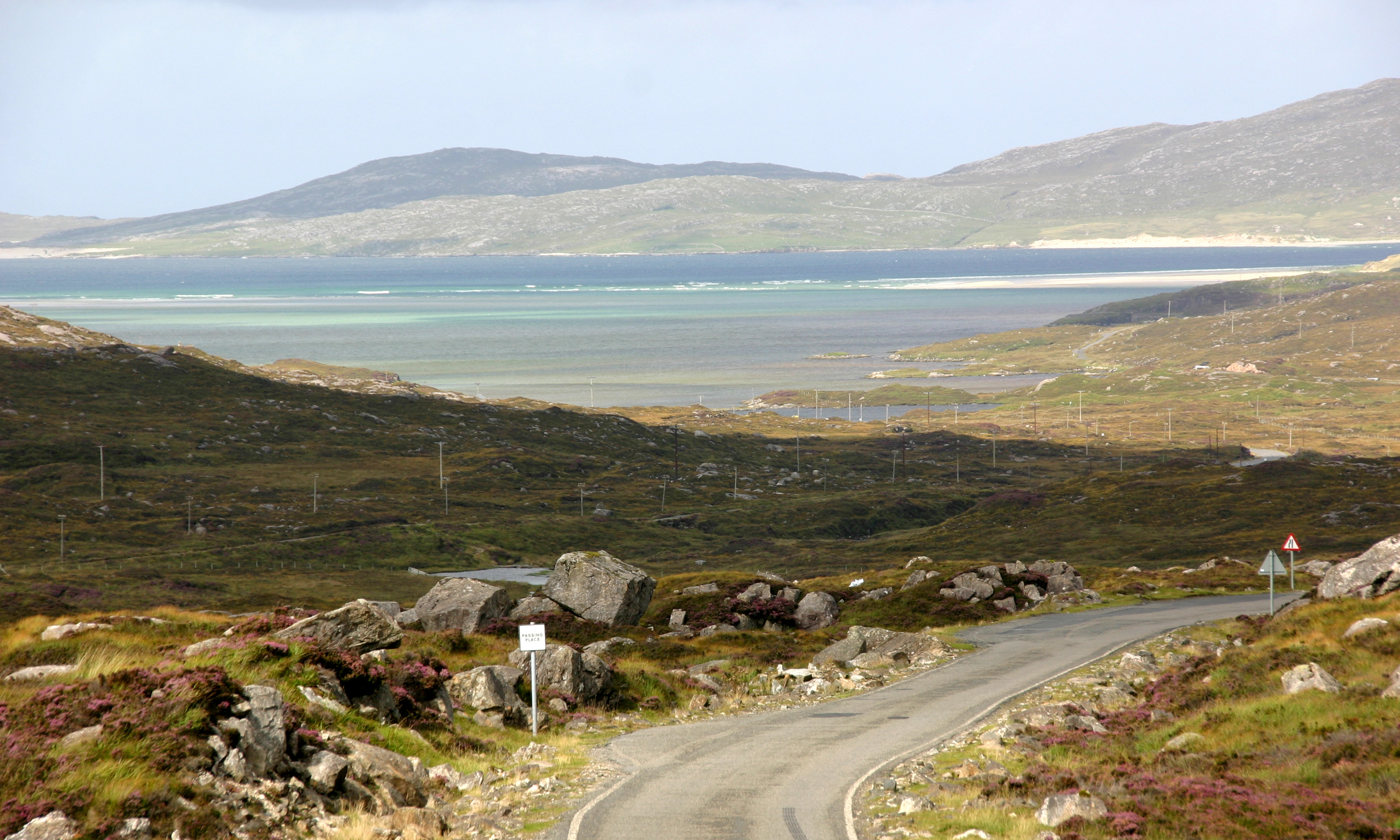
South Harris along the A859, Gerd Eichmann, CC BY-SA 4.0, via Wikimedia Commons
Civility vs Honesty
‘“Finally. How boring hearing everyone say they thought only the best of their neighbours. What’s the point of being nice, if it makes you so dishonest?”
‘“It’s not niceness,” he said. “It’s cowardice.”’‘All of those dead had been blessed with long, stretched-out-lives and in death their bodies were … calcified spite.’
Anna-Maria, an outsider, is a nurse who is courting Sorley McInnes, Innes’s younger brother. She responds gleefully to Cal’s outburst about the McInnes brothers. Cal has called them ‘a couple of chinless idiots’ and hopes their buildings will be struck by lightning and burned to the ground. Anna-Maria is sick of the surface niceties.
What Anna-Maria takes for dishonesty, Cal sees as cowardice. Later, in another conversation with Anna-Maria, Cal says the islanders don’t talk about whether they ‘like’ someone: ‘Whether you like someone or not, you have to live beside them.’ And then, one day, you have to carry their body, ‘all trimming cloth and calcified spite’, to the grave.
The islanders are overtly civil to one another but, as with the women who denigrated Ella, they could be covertly cruel and spiteful. Is there a penalty for life-long politeness? Is it possible to live fearlessly among a small collection of families, whose shared histories are well-known, while still maintaining the social fabric of the group? What damage might such honesty engender?
Secrets
‘Don’t you come to ma funeral and say you loved me if you let there be secrets between us.’ (Ella to Cal)
‘The knowledge rose to the surface till he could glimpse it through the water, and then it was clear, and laid before him like a creel filled with ugly truths … From this all the other troubles in their lives had followed.’ (Cal)
Author Douglas Stuart has said that John of John is ‘a book about a family that has kept secrets too long and hurt each other with their secrets’ (interview with Alim Kheraj for Dazed magazine). Ella and Grace both keep secrets from their children; John, Cal and Innes keep secrets from each other.
What is the effect of secret-keeping on each of the generations, on those who hold the secrets and those who are oblivious to them but implicated in them? What would have been the impact of revealing the secrets?
What happens next?
‘The truth arrived with a realisation that knocked the breath from him. He didn’t want the world. Here is where he belonged.’
Innes tells Cal to ‘go see the world’, but in an instant Cal realises the island is where he belongs. This realisation is bookended in the novel with separate conversations Cal has with his parents. Earlier, Grace has asked: ‘Do you even want all this? … To be home. To be here.’ Cal replied: ‘One day. But not yet. I want to do something with my degree first.’ Later, after the interaction with Innes, and nearing the novel’s end, Cal tells John: ‘I need to go back to the mainland, Dad. I need to do something with this degree.’
Do you think Cal stays or goes? Where would Ishbel, the bellwether, lead him?
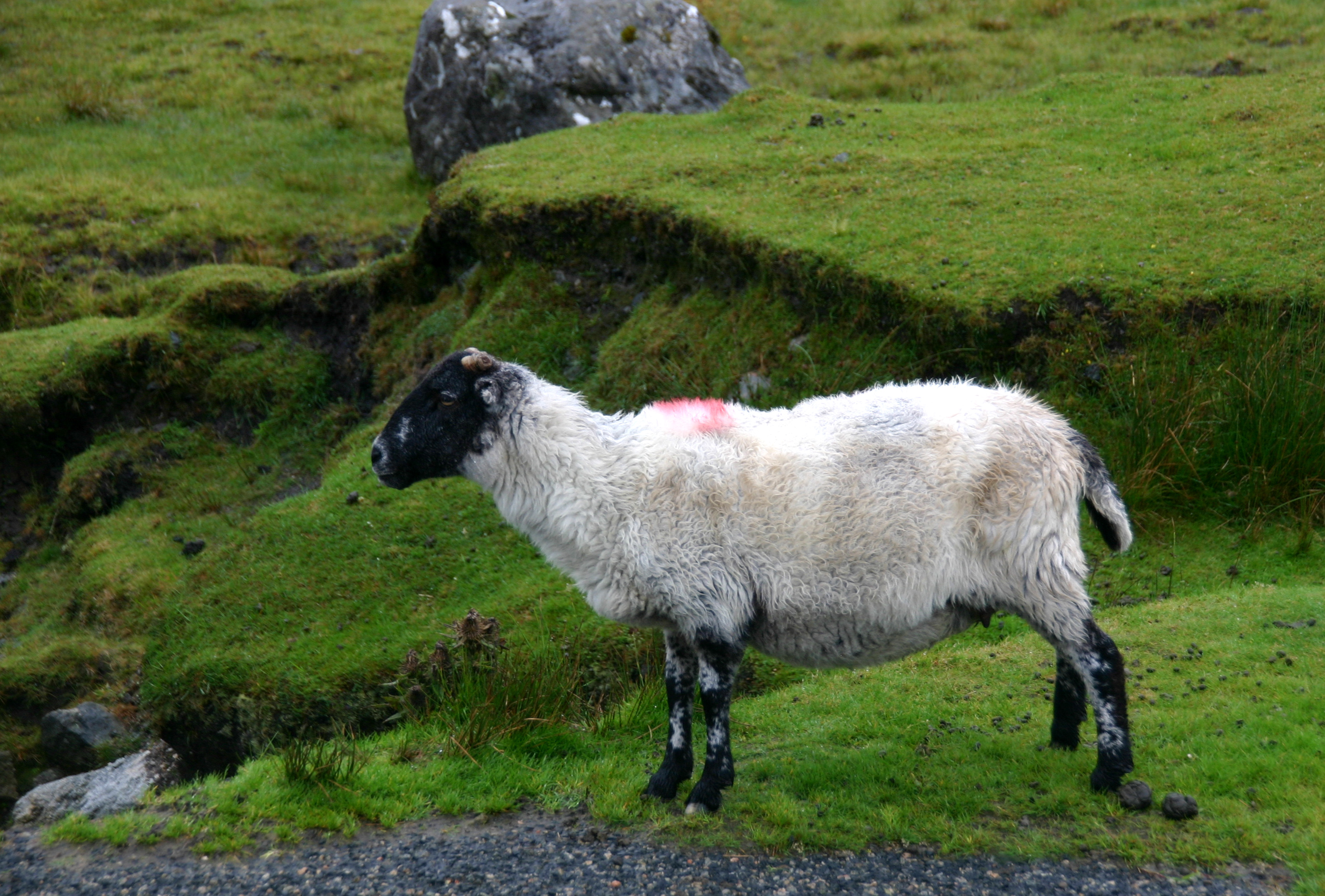
Sheep on the Lewis-Harris Isles border on the A859
Gerd Eichmann, CC BY-SA 4.0, via Wikimedia Commons
Links and Sources
- Douglas Stuart’s website
- John of John by Douglas Stuart, published by Pan Macmillan, 21 May 2026
- John of John was shortlisted for the 2026 Booker Prize. Donna Mackay-Smith, Deputy Head of Editorial for the Booker Prizes, prepared a reading guide for the novel, 22 September 2026
- As one of the shortlistees for the Booker, Stuart wrote an article for The Guardian newspaper about the inspiration behind the writing of John of John, ‘Narrative Threads: How To Write a Booker-Shortlisted Novel’, 7 November 2026
- In an interview with Alim Kheraj for Dazed magazine, Stuart reflected on his childhood, religion and sexuality, and the impact of those factors on his writing of John of John: ‘Douglas Stuart: “Homosexuality and Faith Have Been a Struggle All My Life”’, 22 May 2026
Images
- John of John cover image courtesy of Pan Macmillan
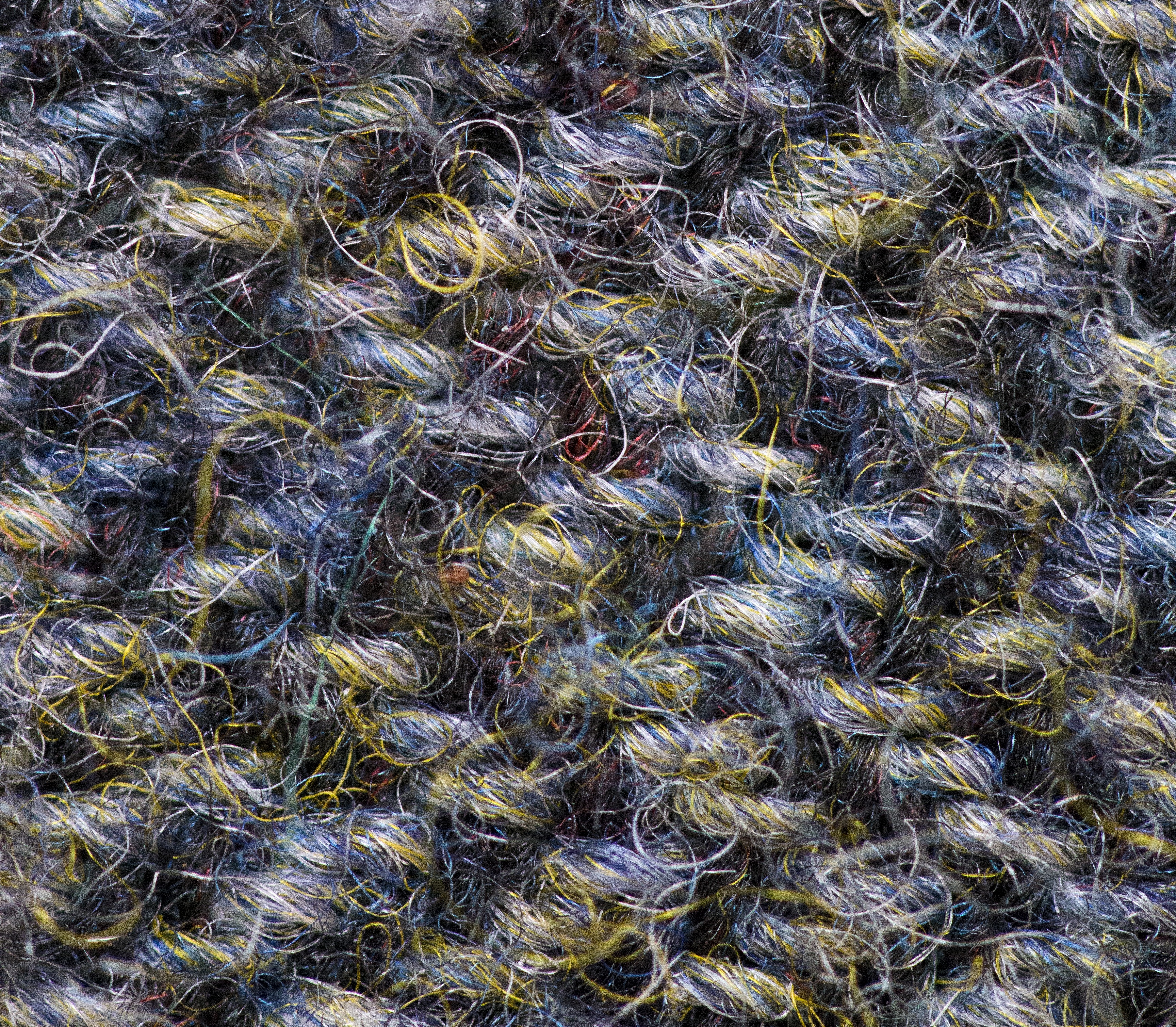
- Header image: Harris tweed cloth, Creative Commons CC0 1.0 Universal Deed
- South Harris along the A859, Gerd Eichmann, CC BY-SA 4.0, via Wikimedia Commons
- Harris tweed loom, Wojsyl, CC BY-SA 3.0, via Wikimedia Commons
- Sheep on the Lewis-Harris Isles border on the A859, Gerd Eichmann, CC BY-SA 4.0, via Wikimedia Commons



Leave a Reply