
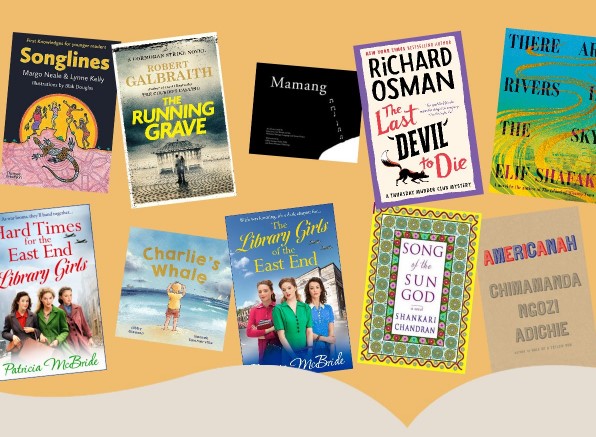
Forty-nine books, 13,975 pages. Shortest book, 32 pages; longest book, 960 pages (#GoodreadsYearinBooks). That’s one way to look at my reading year.
Reading is about many things – enjoyment and pleasure, education and understanding, challenge and extension. Here are some of the books that fulfilled that promise for me in 2024.
Most Fun To Read Aloud
Cover image courtesy of Scholastic
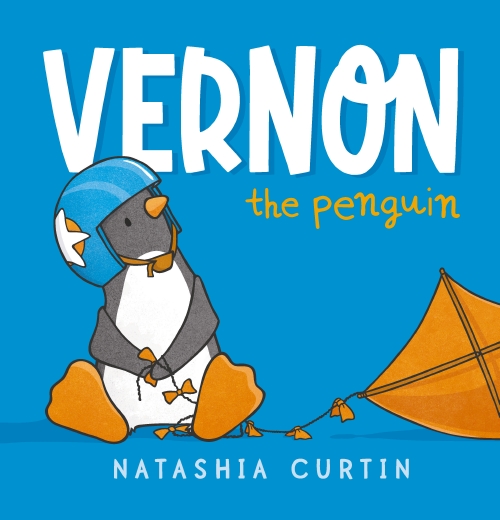
The ‘most fun’ award goes to Natashia Curtin’s Vernon the Penguin. I discovered this book in my local public library and read it repeatedly to several two-, three- and four-year-olds. I didn’t tire of it and neither did they.
The deceptively simple illustrations, using a limited colour palette, convey Vernon’s full range of challenges and emotions as he pursues his dream of flying. Despite being repeatedly told by his penguin colony: ‘You’re a penguin. Penguins can’t fly’, Vernon perseveres.
The outcome of his dogged endeavours is not quite what he’s expecting, but it does bring him satisfaction, joy and acclaim.
Honourable mention:

Cover image courtesy of Scholastic
Repeated readings didn’t dampen the pleasure afforded by this story of Bear being woken from hibernation by the sound of music in the Jingle Jangle Jungle. The generous animals in the jungle band allow Bear to try their instruments (with limited success) until, finally, sheep wonders:
Have you ever tried a microphone? It’s just a simple thing.
You only have to hold it up, clear your throat and sing!
Bear’s earlier cacophonous sounds transform into a vocal performance that leaves the animal audience clamouring for more. Sing on Bear!
The Book from Which I Learned the Most
Cover image courtesy of Hachette Australia
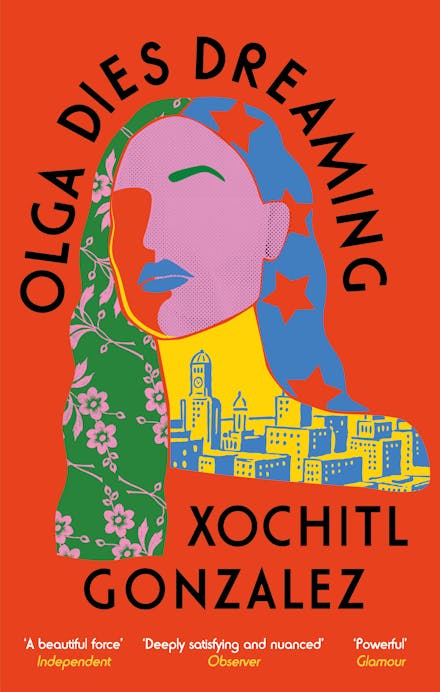
When I picked up Xóchitl González’s Olga Dies Dreaming, I didn’t expect a novel that features a wedding planner protagonist would take me on ride through Puerto Rico’s bitter colonial history or through the murky world of US political corruption, but that’s what I got.
There are plenty of parallels between González’s own life and that of her lead character, Olga Acevedo. Both come from Brooklyn and are the children of political activists; both were raised by grandparents within the Puerto Rican community.
In the novel, set in the 1990s and the 2010s, 2017’s Hurricane Maria is a major plot element – the devastation across Puerto Rico, the US’s wickedly slow aid response, and the complicated reconnection between Olga, her brother and their revolutionary mother.
I am grateful to have read this novel; grateful to Xóchitl González for a window into the lives and culture of Brooklyn’s ‘Brown and Black people’ and grateful for her insights into the complex history and politics of Puerto Rico.
‘From the day she went into Manhattan to begin high school she’d been navigating worlds that felt foreign to her: her language, her values, her way of seeing people and the world always requiring explanation and context.’
Honourable mention:

Cover image courtesy of Penguin Australia
Three stories intertwine: Arthur’s in 19th century London and Nineveh, Narin’s by the River Tigris in 2014, and Zaleekhah’s by the River Thames in 2018. And flowing through them all the ancient Epic of Gilgamesh.
‘Water has memory. Rivers are especially good at remembering.’
Best Recommendation from a Friend

Cover image courtesy of Macmillan Australia
I approach novels that hang off Jane Austen’s estimable coattails with trepidation but I was pleasantly surprised by Janice Hadlow’s The Other Bennet Sister. (Thank you, Jane, for this recommendation.)
Hadlow zooms in on Mary Bennet, the socially awkward, middle sister in Austen’s Pride and Prejudice. Perpetually undervalued and undermined, Mary is consigned to the shadows, unsure of her place in Austen’s world.
Hadlow brings Mary into the light and allows her to mature. Yes, she continues to read and philosophise and practice the piano but, surrounded by the warmth of the Gardiner household, Mary flourishes. She discovers that personal happiness can be thwarted by a lack of candour; to prosper, courage and honesty are required.
‘I would rather tell the truth and risk humiliation than pass up the chance of happiness because I was not brave enough to say honestly what I felt.’
Honourable mention:

Cover image courtesy of Simon & Schuster
Former war correspondent and self-appointed crime investigator John Bailey is traumatised, loved, despised and often drunk. He knows the streets of Sydney – from the dark to the dazzling. There are people out to get him but not if he gets them first.
It’s best to start with book one in this series, The Greater Good. I’ve read the first two titles; three more are waiting in the wings. (There are sample chapters on Ayliffe’s website if you want to get a taste of this pulsing crime series). Thank you, Gryff, for this suggestion.
Favourite Book Set in London

Cover image courtesy of Hachette Australia
Okay, I’m a sucker for London. If I can’t be there, I’ll read books set there. In 2024, nearly 20% of my reading diet had a London setting (in full or in part). I’ve already mentioned London-based There Are Rivers in the Sky and The Other Bennet Sister so now I’m plumping for Monica Ali’s Love Marriage.
Ali puts her characters under the microscope, exploring the universal through the particular: the parent/adult-child relationship, the migrant experience, the nature of love, sexual desire, and self-discovery.
The portrayal of the therapist/client relationship is acutely observed. Therapist Sandor distils the essence of his clinical wisdom into a short phrase: ‘compassion and connection’. His summation rings true in the tussles between all of Ali’s characters.
Honourable mention:

Cover image courtesy of Hachette Australia
The Running Grave is my favourite Strike novel to date (and I’ve enjoyed each of the other six). Yes, it is long (approaching 1,000 pages), but then so are all the Strike stories and the pace doesn’t lag. Galbraith’s (aka J K Rowling’s) insights into the seductive appeal of cults and the trauma faced by those who escape them are compelling.
Most Intriguing Australian Crime Fiction

Cover image courtesy of Echo Publishing

Cover image courtesy of Ultimo Press
I’m going to make this category a tie. Both Viskic and Hyland set their books in Melbourne and its surrounds – Viskic on the coast, Hyland in Melbourne’s rural hinterland – and both incorporate insights from Aboriginal culture and knowledge.
Darkness for Light is the third of Viskic’s Caleb Zelic books. In this instalment, deaf private investigator Zelic is socialising more with the Deaf community and acknowledging his deafness a little less reluctantly in the hearing world.
What could possibly go wrong? Ah, well, there’s the reappearance of his old business partner and ex-cop Frankie. She is never a harbinger of sweetness and light.
While Darkness for Light can be read as a standalone novel, it’s better to read the Caleb Zelic series in order (beginning with Resurrection Bay). The relationships between Caleb and his brother Ant and between Caleb and his on-again/off-again wife Kat develop through the series and are worth appreciating as they unfold.
Canticle Creek is the first book in Hyland’s Jesse Redpath series. Central Australia-based Senior Constable Redpath comes to Melbourne in search of answers in a double murder investigation.
In the fictional town of Windmark (possibly set around Victoria’s Kinglake region), Redpath is met variously with welcome, suspicion, friendship, malice and misdirection. Who can she trust? The sculptor, the ex-footy player, the ex-addict, the German botanist, the timber mill proprietor, the local police?
Fortunately, Redpath has learnt a thing or two from her Northern Territory offsider, Aboriginal Community Police Officer Danny Jakamarra. Danny has been teaching her to listen; Jesse has been paying attention.
Links and Sources
- Goodreads
- Vernon the Penguin by Natashia Curtin
- The Very Noisy Bear by Nick Bland
- Olga Dies Dreaming by Xóchitl González
- There Are Rivers in the Sky by Elif Shafak
- The Other Bennet Sister by Janice Hadlow
- The Greater Good by Tim Ayliffe
- Love Marriage by Monica Ali
- The Running Grave by Robert Galbraith
- Darkness for Light by Emma Viskic
- Canticle Creek by Adrian Hyland

My thanks to Goodreads for keeping track of the books I read in 2024. You can find more of my book reviews on the Goodreads site.



 Thoughts from an Idle Hour
Leave a comment